Introduction to Enterprise Resource Planning
Enterprise Resource Planning (ERP) is the backbone of modern business management, providing organizations with a unified platform to oversee and optimize their core business operations. ERP implementation services guide a company through selecting, configuring, deploying, and maintaining an ERP system, ensuring that organizations can streamline operations and improve efficiency from the outset. ERP systems are comprehensive enterprise software solutions that integrate functions such as financial management, human capital management, supply chain, procurement, and customer relationship management into a single, centralized system. By consolidating data and automating business processes, ERP software enables companies to streamline operations, improve efficiency, and make informed, data-driven decisions.
This guide is intended for organizations evaluating Acumatica ERP solutions and partners preparing for successful ERP implementation. Choosing the right ERP implementation partner is critical for achieving business growth and operational efficiency. ERP implementation services guide a company through selecting, configuring, deploying, and maintaining an ERP system, ensuring a smooth transition and ongoing optimization.
ERP implementation services encompass a wide range of activities, from initial business process assessment and procurement strategy development to data migration, process automation, and ongoing support. Certified ERP consultants leverage their experience with multiple ERP platforms to identify inefficiencies in current processes, mitigate project risks, and ensure seamless integration with existing technology solutions. By focusing on business process automation and process improvement, ERP advisors help organizations maximize efficiency, reduce implementation costs, and drive business growth.
A successful ERP implementation depends on selecting the right ERP implementation partner—one with a proven track record, deep industry experience, and a commitment to your business goals. The right partner will not only deliver implementation services but also provide ongoing support, helping your organization adapt to evolving business needs and regulatory compliance requirements. Whether you are deploying a new ERP system or optimizing an existing enterprise resource planning ERP solution, expert ERP consulting is essential for achieving a successful implementation and realizing the full value of your technology investment.
With the right guidance and a strategic approach, ERP systems become powerful tools for digital transformation, enabling organizations to streamline operations, improve business administration, and position themselves for long-term business growth.
What Are ERP Implementation Services?
ERP implementation services guide a company through selecting, configuring, deploying, and maintaining an ERP system. These services include everything from initial needs assessment and software selection to system configuration, data migration, integration with other business applications, user training, and ongoing support. ERP consultants help businesses implement and optimize ERP systems to streamline operations, improve decision-making, and ensure the solution continues to meet evolving business needs.
Typical Phases of ERP Implementation and the Consultant’s Role
Key phases of ERP implementation include planning and analysis, design and configuration, data migration, testing and training, and go-live and support. ERP implementation services guide a company through each of these steps, ensuring a structured and effective rollout. Consultants play an ongoing role by assessing current business processes, identifying pain points, and understanding long-term objectives. They also provide training to your team, manage change, and offer ongoing support and optimization to maximize the value of your ERP system post-implementation.
Key Takeaways
- The right ERP implementation partner (an Acumatica-specialized, vendor-aligned but client-first consultancy like Strategies Group) compresses implementation timelines from 9-12 months to 4-6 months while reducing project risks.
- A strong partner accelerates time-to-value through structured requirements definition, rapid configuration using native Acumatica capabilities, and proven change management practices.
- This article is written specifically for organizations evaluating Acumatica partners and for those preparing for the Acumatica Summit at the end of January 2026.
- Readers will learn what to ask potential partners before, during, and after Acumatica implementation to avoid the delays and budget overruns that affect over 55% of ERP implementation projects.
- Data migration, integrations, and user adoption are where experienced partners save you months, not days, by applying proven methodologies from dozens of successful implementation projects.
What Do ERP Implementation Services Include?
ERP implementation services guide a company through selecting, configuring, deploying, and maintaining an ERP system. ERP consultants help businesses implement and optimize ERP systems to streamline operations and improve decision-making, ensuring the solution continues to meet evolving business needs.
Why Your Acumatica Partner Matters More Than the Software
Many Acumatica implementations fail to hit timelines or ROI targets not because of Acumatica itself, but because of weak implementation approach and partner fit. Industry benchmarks show that ERP systems achieve a 75% success rate with expert consultants versus just 45% for organizations going it alone.
Acumatica is a powerful cloud ERP software platform designed for mid-market companies seeking unlimited user licensing, native mobile access, and real-time business intelligence. However, its speed to value is determined largely by who designs, configures, and rolls it out. The enterprise resource planning capabilities are there, but unlocking them requires deep understanding of your business operations and Acumatica’s architecture.
For attendees of Acumatica Summit 2026 in late January, the strategic decision is less “Acumatica or something else” and more “which Acumatica partner can help us succeed fastest?” This is especially true when comparing options like oracle netsuite or microsoft dynamics 365, where the implementation partner’s expertise often matters more than feature differences.
Strategies Group operates as an Acumatica-focused ERP partner, bringing structured methodologies and industry playbooks rather than generic ERP consulting services. Our approach centers on understanding your unique challenges before configuring anything.
The following sections outline concrete ways the right partner removes risk and pulls value forward into the first 3-12 months after go-live.
Next, we’ll explore how a strong partner translates your business needs into actionable requirements for Acumatica.

From Vendor Demos to Real Requirements: Getting Acumatica Right Up Front
Most companies arrive at Summit after seeing polished Acumatica demos, but still lack a clear, prioritized requirements list. The gap between “that looks great” and “here’s exactly what we need configured” is where ERP implementation services prove their worth.
An experienced Acumatica partner facilitates structured discovery workshops to translate high-level goals into concrete use cases and configuration requirements. This involves:
- Documenting current processes across finance, operations, and customer-facing teams
- Identifying inefficiencies in existing workflows that Acumatica can address
- Mapping business requirements to specific Acumatica modules and features
- Prioritizing by business impact rather than attempting to solve everything at once
Requirements Differ by Industry
Mid-market verticals have distinct needs that shape requirements:
| Industry | Key Requirements Focus |
|---|---|
| Construction | Project accounting, WIP adjustments, subcontractor management, field mobility |
| Field Service | Dispatch scheduling, mobile work orders, inventory at technician level |
| Manufacturing | Production scheduling, BOM management, shop floor control, lot/serial tracking |
| Distribution | Multi-warehouse operations, landed cost, customer-specific pricing, order orchestration |
| Professional Services | Time and expense capture, project profitability, resource forecasting |
Defining Realistic Phase 1 Scope
The partner should help define a realistic phase 1 scope that can go live within a predictable timeframe instead of attempting a “big bang” rollout. Phased approaches have proven more successful for Acumatica implementations, allowing iterative value delivery.
A typical phase 1 might include:
- Core financials (GL, AP, AR, cash management)
- Distribution or project accounting (depending on your primary business model)
- Two to three critical integrations (e-commerce, CRM, or payroll)
- Role-based dashboards for executives and key managers
Example scenario: A distribution company clarifies requirements for multi-warehouse picking, landed cost allocation across purchase orders, and customer-specific pricing tiers. The partner documents how Acumatica’s warehouse management module handles these scenarios, identifies which features require configuration versus extension, and builds a requirements matrix that becomes the foundation for accurate project scoping and ERP implementation costs estimation.
With requirements clearly defined, the next step is configuring Acumatica for rapid wins and avoiding unnecessary customization.
Configuring Acumatica for Rapid Wins, Not Endless Customization
Acumatica’s flexibility is both a strength and a risk. Without guidance, organizations over-customize and delay go-live, sometimes by 6-12 months. The enterprise software platform offers extensive configuration options, but that openness requires discipline to prevent scope creep.
The right partner prioritizes configuration and native Acumatica capabilities over heavy custom ERP development in the first release. This includes leveraging:
- Role-based dashboards for CFO, operations manager, and warehouse supervisor views
- Generic inquiries for custom reporting without code
- Workflow automation for approvals and notifications
- Import scenarios for data updates and mass changes
When to Configure, Extend, or Build
Strong partners establish clear rules about technology decisions:
| Approach | When to Use | Examples |
|---|---|---|
| Configure | Feature exists natively in Acumatica | Custom fields, workflow rules, dashboard widgets |
| Extend with ISVs or Third Party Solutions | Proven add-on solves the need | EDI, advanced shipping, and payment processing |
| Custom development | Critical gap with no existing solution | Unique industry calculations, proprietary integrations |
The partner should establish a configuration roadmap beginning with mission-critical business process flows that deliver measurable wins within 90-180 days:
- Order-to-cash (quote, order, ship, invoice, collect)
- Procure-to-pay (requisition, PO, receipt, bill, payment)
- Project accounting (estimate, track, bill, recognize revenue)
This approach supports business process automation without the risk and timeline extension that comes with excessive customization. ERP consultants who push custom development early often create technical debt that slows future Acumatica upgrades.
With your system configured for rapid value, the next challenge is managing data migration, integrations, and user adoption to keep your project on track.
Next, we’ll examine how expert partners handle data migration, integrations, and change management to keep your ERP project on schedule.
Data Migration, Integrations, and Change Management: Where Partners Save You Months
Timelines slip most often in three areas: data migration, integrations, and user adoption. All three are heavily influenced by partner experience, and this is where ERP consulting expertise separates good implementations from troubled ones.
Data Migration Strategy
The right Acumatica partner defines a data migration strategy early, addressing questions that many organizations overlook:
- Which historical periods to bring over (12-24 months of detail vs. summary balances)?
- How to cleanse legacy data before migration?
- What validation rules will catch errors before go-live?
- Which records need manual review versus automated loading?
Data migration typically consumes 20-30% of total project time. Partners with deep industry experience know common data quality issues in your vertical and how to address them proactively.
Integration Patterns
A seasoned partner comes with proven integration patterns for common software systems used by mid-market firms:
| System Type | Common Integrations | Partner Value |
|---|---|---|
| CRM | Salesforce, HubSpot | Bi-directional sync for customer relationship management data |
| E-commerce | Shopify, BigCommerce, Magento | Order and inventory synchronization |
| Field Service | Service Trade, Jigx, BuildOps, ServiceTitan | Work order and billing integration |
| Payroll | ADP, Paylocity, Workforce Go, Lumber, Miter | Human capital management data flow |
| BI Tools | Power BI, Tableau, Velixo, Dataself | Seamless integration for advanced analytics |
| Project Management | Procore, JobPlanner, Project Manager | Manage projects with ease and have financial data flow from the field to back office |
Independent ERP consultants often underestimate integration complexity. Partners who have completed dozens of Acumatica projects know which integrations work smoothly and which require additional effort. Learn how to choose an ERP that delivers lasting value to ensure long-term growth and profitability.
Change Management Beyond Training
Change management is not only training. The partner should provide:
- Structured communication plans keeping stakeholders informed throughout the implementation process
- Role-based training paths tailored to how each user will work in Acumatica
- Super-user networks creating internal champions who support adoption
- Executive sponsorship frameworks ensuring leadership visibly supports the new system
Experienced partners can boost user adoption rates from typical 50-70% to over 90% through these structured approaches. This directly impacts how quickly your organization realizes value from the ERP solutions investment.
Compressing schedule risk: A partner compresses timeline risk by running pilot migrations and integration tests months before targeted go-live. This surfaces issues when there’s time to resolve them, rather than during the critical cutover weekend.
With data, integrations, and change management in place, the next focus is on measuring value from day one with actionable KPIs and dashboards.
Next, let’s look at how to measure value from day one with KPIs and dashboards in Acumatica.
Measuring Value From Day One: KPIs and Dashboards in Acumatica
Many ERP projects go live without clear success metrics, making it difficult to claim early wins to leadership. This undermines confidence in the digital transformation initiative and can slow user adoption across the organization.
The right partner works with finance and operations leaders before configuration to define a small, focused set of KPIs that Acumatica will surface on day one. This transforms the new ERP system from “another software project” into a visible driver of business goals.
Essential Day-One KPIs by Function
| Function | Key Metrics | Dashboard Owner |
|---|---|---|
| Finance | Days sales outstanding, cash position, AP aging | CFO/Controller |
| Operations | Inventory turns, on-time shipments, order accuracy | Operations Manager |
| Projects | Margin by job, estimate to complete, utilization | Project Manager |
| Sales | Pipeline value, quote-to-close ratio, customer profitability | Sales Director |
| Warehouse | Pick accuracy, putaway time, and receiving backlog | Warehouse Supervisor |
Concrete Dashboard Elements
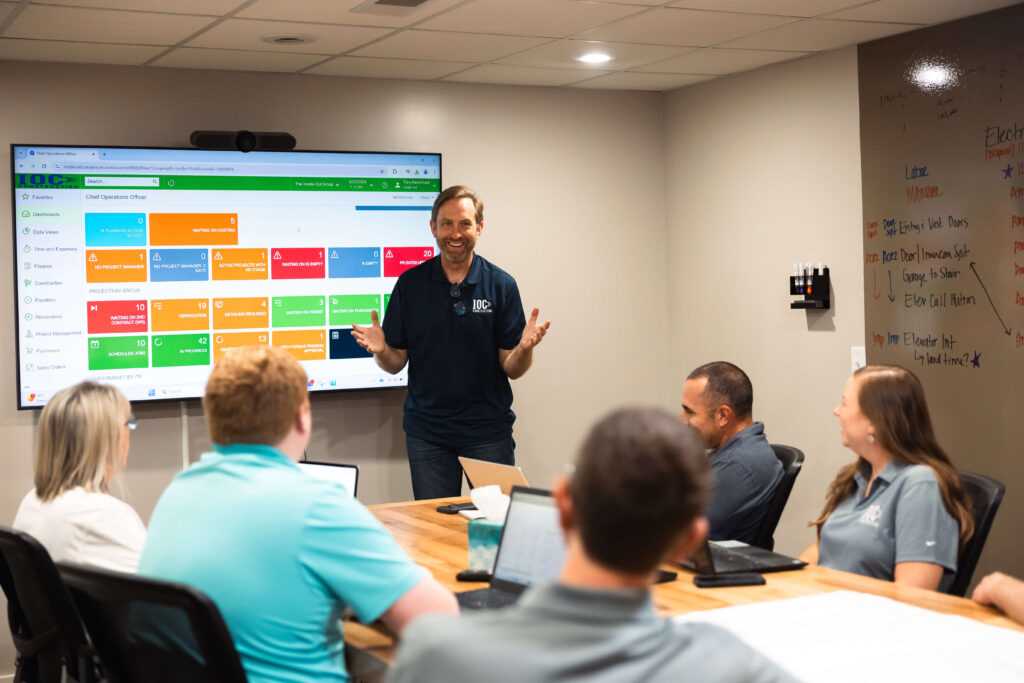
An Acumatica partner sets up role-based dashboards and generic inquiries aligned to these KPIs so that executives and managers immediately see improvements after cutover:
- Dashboard tiles showing real-time metrics with drill-down capability
- Scheduled reports delivered via email at frequencies matching business rhythm
- Alerts and notifications triggered by exceptions (e.g., purchase orders exceeding budget, projects slipping past planned dates, inventory falling below safety stock)
Having visible early KPIs helps build internal confidence in Acumatica and supports stronger adoption across finance, operations, and sales teams. When people see the new system making their jobs easier and providing better visibility, resistance fades.
This approach aligns with process improvement goals. You’re not just replacing old software systems with new ones, but actively measuring whether business management is getting better.
With KPIs and dashboards in place, the next step is to ensure you select the right partner by asking the right questions before, during, and after Acumatica Summit 2026.

What to Ask Potential Acumatica Partners Before, During, and After Summit 2026
Acumatica Summit 2026 in late January is the ideal venue to vet potential partners face-to-face. You’ll meet ERP experts from multiple ERP platforms and can evaluate who truly understands your industry and business requirements.
Questions About Experience and Track Record
| Question | What You’re Looking For |
|---|---|
| How many Acumatica projects did you complete in 2023-2025? | Volume indicates active practice; look for 10+ per year |
| Which industries do you specialize in? | Alignment with your vertical and deep industry knowledge |
| What’s your typical implementation timeline for a company our size? | Realistic ranges (4-9 months) vs. overly optimistic promises |
| Can you provide references from similar projects? | Willingness to connect you with past clients |
| How do you handle multiple ERP platforms if we have subsidiaries on sap business or microsoft dynamics? | Flexibility and integration capabilities |
Questions About Methodology
- How do you phase projects to deliver early value?
- What’s your approach to change management and user adoption?
- How do you handle scope creep and project risks?
- What does your project governance look like (steering committees, status reporting)?
- How do you ensure we’re self-sufficient in Acumatica by the end of the first year?
Questions About Ongoing Support
- Quarterly reviews to identify process improvement opportunities
- New Acumatica release support (Acumatica releases twice yearly with significant enhancements)
- Incremental automation projects to extend value over time
- Ongoing support models and response time commitments
- Training for new employees joining after go-live
Questions About Partnership Approach
- Do they understand your selection process and respect your timeline?
- How do they approach contract negotiations? Are they transparent or with hidden costs?
- What’s their philosophy on regulatory compliance and industry standards?
- How do they stay current with market trends and evolving business needs?
- Can they support technology initiatives beyond ERP (integrations, BI, process automation)?
Ready to discuss your Acumatica roadmap? Schedule a conversation with Strategies Group before or during the January 2026 Summit. We’ll review your current processes, help you identify gaps, and outline a realistic path to successful implementation. Contact us at marketing@strategiesgroup.com or call 678-684-1170.
FAQ
How long does a typical Acumatica implementation take with the right partner?
With an experienced Acumatica partner like Strategies Group, core implementations typically range from 4-9 months depending on complexity. A focused phase 1 covering financials and distribution or project accounting can go live in 4-6 months. More complex scenarios involving multiple entities, extensive integrations, or custom development may extend to 9-12 months. Compare this to on-premises ERP offerings from ERP vendors like SAP or older Microsoft Dynamics versions, which often required 12-24 months. The cloud architecture of enterprise resource planning ERP solutions like Acumatica enables faster deployment when paired with proven implementation methodology.
How should we prepare internally before engaging an Acumatica partner?
Strong internal preparation significantly accelerates implementation projects. Before engaging certified ERP consultants, your organization should:
Preparation Steps:
- Document key current processes in finance, operations, and customer-facing areas
- Identify obvious inefficiencies and pain points you want the new system to address
- Begin cleaning master data (customers, vendors, items, chart of accounts)
- Agree on executive sponsors and a dedicated project manager
- Establish realistic budget and timeline expectations
- Clarify which stakeholders will participate in requirements workshops
Organizations that complete these steps before partner engagement typically save 4-6 weeks on their implementation timeline.
What usually drives Acumatica project costs up or down?
Several factors influence ERP implementation costs.
Factors that increase costs:
- Number of legal entities and currencies
- Complexity and quantity of integrations with external software systems
- Extent of custom development versus configuration
- Data migration complexity (multiple legacy systems, poor data quality)
- Geographic distribution of users requiring training
- Procurement strategy and timing relative to Acumatica’s fiscal year
Factors that decrease costs:
- Accept phased approaches rather than demanding everything at once
- Leverage Acumatica’s native capabilities and ISV ecosystem
- Clean data proactively before migration
- Commit strong internal resources to the project
- Work with independent ERP partners who know how to streamline operations efficiently
How do Acumatica partners and customers both benefit from attending Summit 2026 together?
Attending Acumatica Summit 2026 together creates shared context that accelerates business growth post-event. Benefits include:
- Shared product roadmap insights: Both parties hear Acumatica’s direction directly, making future phase planning more strategic
- Networking opportunities: Meeting other companies in your industry who’ve solved similar challenges
- Training and certification: Deeper technical expertise for both partner and customer teams
- Partner evaluation: Face-to-face time helps you assess cultural fit and technical expertise before major commitment
- Planning future phases: Seeing new features like AI Studio or advanced project management capabilities helps prioritize what’s next
For organizations considering multiple ERP platforms, Summit provides clarity on Acumatica’s trajectory and competitive positioning.
What distinguishes an Acumatica-specialized partner from general ERP consulting services?
Acumatica-specialized partners like Strategies Group bring focused expertise that general consulting services cannot match:
- Certified expertise: Deep knowledge of Acumatica’s architecture, APIs, and best practices
- Industry playbooks: Pre-built configurations and implementation patterns for specific verticals
- ISV relationships: Knowledge of which third-party extensions work well and which to avoid
- Release familiarity: Understanding of how Acumatica’s twice-yearly releases affect existing implementations
- Community connections: Relationships with Acumatica product teams and other expert partners
General ERP consulting firms spread across sap business, oracle netsuite, microsoft dynamics 365, and other ERP platforms may lack the depth required to maximize efficiency with Acumatica specifically. When evaluating partners, ask whether Acumatica represents their primary focus or one of many ERP services they offer.
The right ERP implementation partner transforms enterprise applications from a multi-year gamble into a predictable path to operational excellence. Whether you’re attending Acumatica Summit 2026 as a potential customer or a fellow partner, Strategies Group welcomes the conversation about how to drive business growth through smarter ERP implementation.