
How Strategies Group Helped Storm Smart Integrate its Construction, Manufacturing, and Service Business

Download the Full Case Study

About Storm Smart
Company Website:
Hurricane Protection in Florida | Screens, Shutters & Impact Windows
Industry
Specialty Trade Contractor: Construction, Manufacturing
Apps Replaced
QuickBooks
Number of Employees
250-500
Location
Fort Myers, FL, USA
Products
Acumatica Construction Edition with:
Manufacturing
Field Service
Project Management
CRM
Warehouse Management

See How Storm Smart Transformed Their Business
Storm Smart was looking for a way to unify their financial and operational data, improve reporting accuracy, and scale efficiently. With Acumatica and the expert guidance of Strategies Group, they transformed their business—streamlining workflows, enhancing team training, and gaining real-time visibility into their operations.
Their success hasn’t gone unnoticed. Named Acumatica’s 2026 Customer of the Year, Storm Smart has become a power user of the system, sharing their expertise and best practices at industry events, including multiple presentations at Acumatica Summit.
Download the case study to learn how Storm Smart leveraged Acumatica and Strategies Group to drive efficiency, growth, and industry leadership.
A Deep Dive into Mid-States' Connected Solution
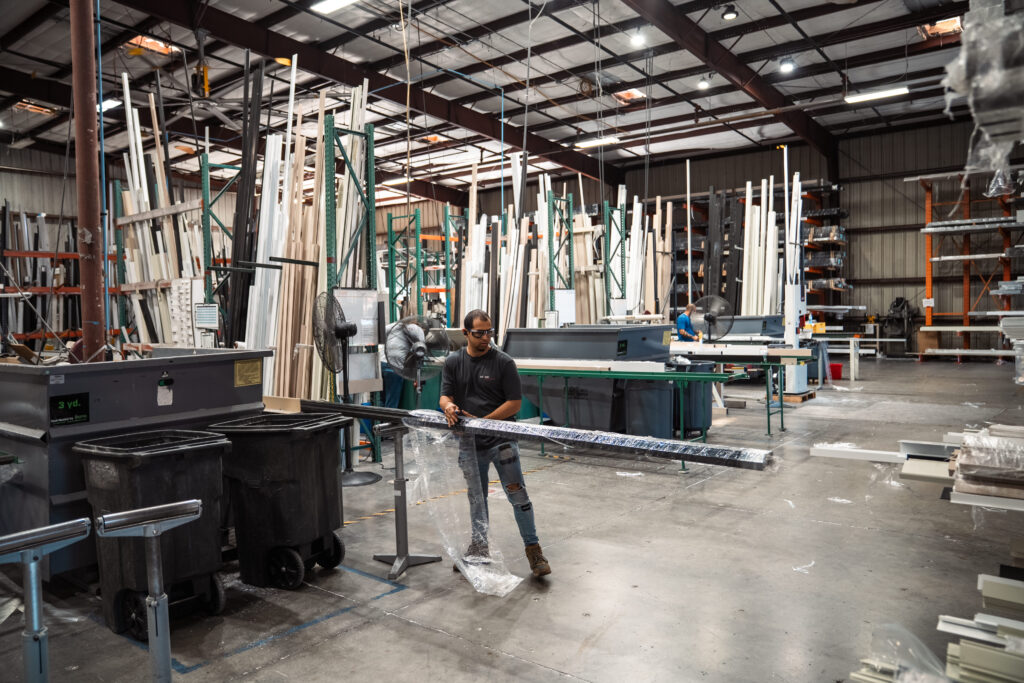
Storm Smart is a designer, manufacturer, installer, and servicer of hurricane protection products for homes across Florida. For years, the vertically integrated business ran on stacks of paper and as many as 15 disconnected software systems, leaving executives with little visibility beyond a week out and field teams buried in manual work. After Rotunda Capital invested in the company in 2021, Storm Smart set out to streamline and scale operations with Acumatica.
Tapping Acumatica and integration partner Strategies Group, Storm Smart consolidated its systems from 15 down to just four or five, and connected every step from a closed deal in Salesforce through invoicing, purchasing, manufacturing, and field service. company grew by 50% without a corresponding jump in administrative headcount, and positioned itself for continued growth across Florida and beyond.
Key Results
- Scaled for Growth: Since implementing Acumatica, the company grew by 50%, from roughly 200 to more than 300 employees, while now protecting 110,000+ homes.
- Headcount Avoidance: Avoided adding an estimated 20+ employees to date by scaling order volume through end-to-end automation, a number expected to double as the company continues to grow.
- Software Consolidation: Reduced from up to 15 software systems to four or five, cutting maintenance costs and eliminating data silos.
- Faster Monthly Close: Shortened the monthly close from 10 business days to three, a 70% improvement that put real-time answers in leadership’s hands.
- Higher Inventory Accuracy: Raised inventory accuracy from 75% to more than 98%, driving peak-season stockouts to nearly zero.
- Streamlined Commission Tracking: Automated commission calculations for field personnel, reducing duplicate payments, overpayments, and labor costs.
- Hands-Free Workflows: When a deal closes in Salesforce, Acumatica automatically creates the project, releases the initial invoice, opens a PO, and receives items, with no one clicking anything.
- Longer Planning Horizon: Moved from planning a single week ahead to projecting months in advance.
Storm Smart’s vertically integrated model, designing, manufacturing, installing, and servicing storm protection products in-house, sets it apart from competitors, but it also makes the business complex to run. When Rotunda Capital invested in 2021, Storm Smart operated two offices, employed about 200 people, had a robust customer base, generated millions in revenue, and had a large, growing market opportunity across Florida and up the East and Gulf coasts. Before it could expand rapidly, Storm Smart needed to shore up its outdated back-office technology. “In order to scale this business, we had to professionalize a lot of our processes. There’s no way we would’ve been able to double through brute force,” says Scot Burris, Chief Executive Officer, Storm Smart.
The old process began with paper, and a lot of it. Leads arrived in stacks that staff entered by hand before any work could start. “I’ve never seen so many stacks,” says Jennifer Pellechio, Director of IT at Storm Smart, describing piles that started on the floor and rose past a desk. Signed contracts, checks, and cash payments lived in folders for years before that information was retyped into software, one system at a time.
Storm Smart juggled up to 15 applications, including QuickBooks and Salesforce, none of them connected. Staff sometimes logged into as many as five different systems just to assemble the information they needed for a single task. “We had a lot of different systems not talking to each other,” says Pellechio. “It took a lot of maintenance, and there was a lot of unproductive time that slowed us down.”
The path from opportunity to completed project was manual and complex. Phone calls and paper forms fed a website, which fed Salesforce. A homegrown tool generated quotes, which then went back into Salesforce for project management and field service. With every team working from a different silo, executives could not see daily operations clearly enough to plan manufacturing or scheduling more than a week out, and because the software ran on-premises, a storm that knocked out the electrical grid could knock out the business too.
Storm Smart typically works on 800 projects a month, each running 8 to 16 weeks through approvals, permitting, inspections, and punch-out, and production had no manufacturing software at all. “Our production system was either in someone’s head, on a Post-it note, or on a coffee-stained, soda-soaked piece of paper sitting by where they manufactured the product,” says Burris. Commission tracking told a similar story: Storm Smart calculated and paid commissions for its 130 field personnel largely by hand, often questioning the accuracy of the numbers, which trickled in late and never aligned with revenue recognition.
Storm Smart’s leaders knew they could not scale on 15 systems and stacks of paper. The Rotunda investment became the catalyst for a technology overhaul. The team evaluated NetSuite, Infor, and several other ERP systems, but found that many lacked the seamless connectivity Storm Smart needed with modules that did not work well together.
Acumatica offered a cohesive environment that integrated cleanly with third-party applications, was priced on consumption rather than per user licensing, and came with a clear roadmap for continued platform improvement. When Burris saw Acumatica’s dashboards demonstrated, it clicked. “For the first time, I could imagine opening my laptop and seeing the whole business at a glance. Not last month’s business. Today’s. That was the moment I knew we’d found our answer.”
Ease of use sealed it for the team responsible for adoption. “If you’re not technical, you’re going to pick it up quick, and you can customize it,” says Pellechio. “You can do a lot of great things, but you don’t need to.”
Acumatica partner Strategies Group helped Storm Smart deploy Acumatica built for specialty construction firms that also manufacture their own products. Acumatica united projects, jobs, the factory floor, and field service under one intelligent system, tailored to integrate seamlessly with Storm Smart’s existing CRM and CPQ systems.
Strategies Group specializes in working with construction firms that also distribute, manufacture or service goods. The firm seeks to partner with clients to help them grow and works throughout a client’s lifecycle with Acumatica.
Strategies recognized that Storm Smart operated as a manufacturer and also serviced customers as part of its construction business and needed a single platform that united functionality that would streamline all aspects of its business.
With Acumatica installed, Storm Smart gained the visibility, automation, and confidence to grow fast without breaking.
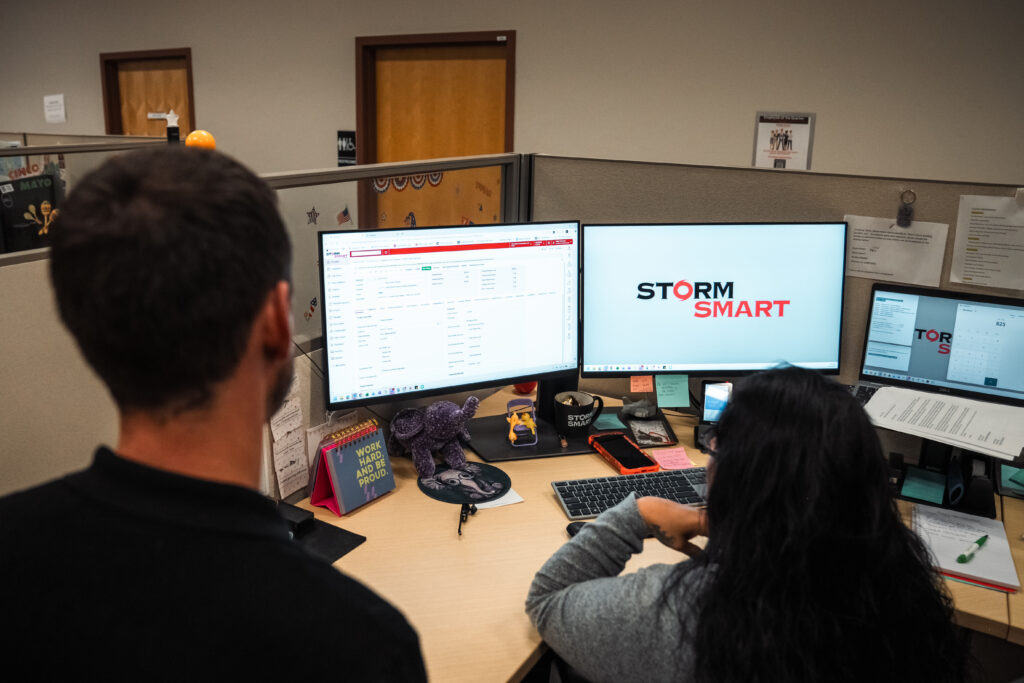
Acumatica gave Storm Smart a single source of truth that united every department. Sales can now see live inventory before promising an install date. Production tracks materials and costs as work happens on the floor, supported by real-time production management and barcode-enabled shop floor data collection. Finance automates invoicing and approvals instead of wrestling with manual entry, and material requirements planning anticipates shortages before they bite.
“The first time I watched our material requirements planning flag a component before we ran out, I actually laughed out loud,” says Josh Higgins, Business Applications Specialist at Storm Smart. “After years of fire drills, the system was looking around corners for us. It felt like we’d hired the most organized employee in the world who never slept.”
Role-based dashboards show each team exactly what matters, from open production orders to past-due operations to cash on hand. Because the platform is mobile, field crews and office staff work from the same accurate information, whether on a rooftop, in the warehouse, or driving between job sites. “Our installers can pull up everything they need from a tablet,” Pellechio says. “No more calling the office, no more waiting on hold, no more guessing. The information travels with them. That changed the rhythm of our entire day.”
Workflows that once took days now move in hours. When a deal closes in Salesforce, Acumatica automatically creates the project, releases the initial invoice, opens a PO, and receives items, all without anyone clicking anything.
“Storm Smart built its core business into their Acumatica system to the point where they have GIs that show exactly what needs to happen next in their process,” says Daniel Collins, President, Strategies Group. “They’ve built so many automations that save them so much time on the back end of doing things.”
When they enter an opportunity, it can go all the way through to the initial invoice,” he adds. “It automatically sets up a project, creates the appointments needed, which gets employees and subcontractors on site. That’s incredible without needing manpower.”
In finance, automated workflows replaced 20 hours of weekly manual entry, cutting that figure by more than 80%. That automation reshaped the calendar: the monthly close dropped from 10 business days to three, a 70% improvement, and executives now watch the business day to day and project months in advance rather than waiting for month-end and forecasting only a week out.
Automated commission tracking brought similar relief to Storm Smart’s 130-person field service team, replacing manual calculations that had produced duplicate payments and overpayments with a system that aligns commissions to revenue recognition. Sharper, real-time data has also given leadership better visibility into financial performance by region and product line, supporting more informed, proactive decision-making.
On the production floor, real-time visibility and tighter inventory control ended the costly surprises that once derailed schedules. Inventory accuracy climbed from 75% to more than 98%, and stockouts that once struck several times a month during peak season fell to nearly zero, even as storm-season demand spiked. “Inventory used to be our biggest blind spot. Now it’s one of our greatest strengths,” says Higgins. “We carry what we need, we know where it is, and we stopped tying up cash in materials sitting on a shelf for no reason.”
Field technicians no longer waste time calling the office for information. They use the Acumatica mobile app to manage appointments, track time, access job files, and collect payment, all in one place. Customer service feels the difference too: with a connected view of every order, the team cut response times from days to hours. “When a worried homeowner calls us, we can tell them exactly where their order stands,” says Pellechio. “That confidence in our own answers, that’s what Acumatica gave us. And our customers feel it.”
With automated workflows, real-time dashboards, and leaner operations, Storm Smart expanded its order volume without adding the 20 to 40 administrative employees executives estimate would otherwise have been needed. Since implementing Acumatica, the company has grown by 50%.
Acumatica was a great fit because the platform has end-to-end functionality and allows a customer to configure the software to fit its business, Collins says. “The software provides many modules but your data lives in the same spot, available to each module. Storm Smart is also a customer that wants to grow and wants to continue to make Acumatica fit their business model, and they’ve done an excellent job with that.”
For example, Collins says, Strategies created a task subtotal for Storm Smart that shows executives item subtotals for things like how much revenue relates to windows, doors, and other items, which allows Storm Smart to view a project at a very high level. “The data makes it more like a true financial statement of a project,” says Collins. “They can then look across all of their projects and see how much revenue can be attributed to windows, doors, flood products and others, which provides a different view of the business.”
Acumatica provided Storm Smart with predictability and efficiency, Collins says. “It’s helped them grow without adding a bunch more headcount. They are growing without having to double up on the staff to support that growth. They want the system to take the load and not the people.”
Storm Smart executives say having a partner well versed in Acumatica, one that understands the complexities of construction firms that also make products and install them, really helped them achieve their goals and more.
“The partnership through the whole process and afterwards as we move forward is unique from anything I’ve seen before,” says Burris, who has worked with several ERPs. “The investment from Acumatica and Strategies Group felt like we were all on one team, and you’re not always going to find that.”
Strategies Group was very open, transparent, provided guidance and feedback, and “weren’t afraid to say, wait a minute, have you thought about this?’” Burris says.
“I recommend them all day long, adds Pellechino. “They understand what we’re doing and really work to understand our business and automation needs. They’ve been great partners.”
Storm Smart Named Acumatica Customer of the Year 2026
Since 1996, Storm Smart has grown into Florida’s leading manufacturer and installer of hurricane protection, protecting more than 100,000 homes along the way. Storm Smart partnered with Strategies Group to implement Acumatica, creating a connected platform capable of supporting its complex operations and continued growth. The results speak for themselves: Storm Smart has expanded from two branches to seven, manages approximately 800 jobs each month, and has grown toward $200 million in revenue.
That transformation earned Storm Smart one of Acumatica’s highest honors: 2026 Acumatica Customer of the Year. Recognized at Acumatica Summit 2026, Storm Smart represents what’s possible when strong leadership, engaged employees, the right technology, and the right implementation partner come together. With 75% of its 430+ employees already using Acumatica—and adoption expected to reach 90%—Storm Smart has built a scalable foundation for its next stage of growth. As Acumatica’s back-to-back Construction Partner of the Year, Strategies Group is proud to have partnered with Storm Smart on a transformation that has become a flagship customer success story within the Acumatica community.